Benchmark results for a simple rotation transform, various interpolations
| Parent ↗ |
Summary
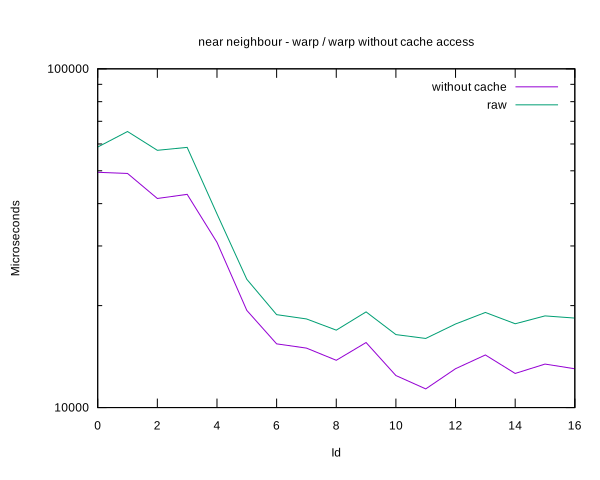
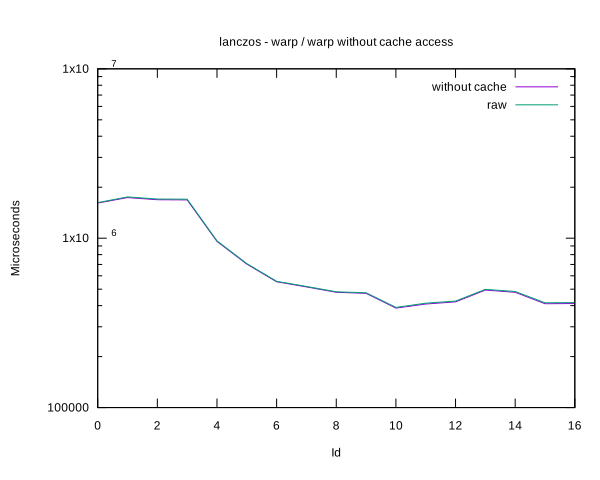
The interpolation methods falls into three groups.
near-neighbourandbilinearas single fast group, followed bybicubicas much slower, andlanczosa few orders slower than that.
Correlates very well with the size of the neighbourhood used to compute each interpolated value from.
Todo
- See how much this is influenced by the separate fetching of the necessary neighbourhoods for each result pixel.
- This requires the writing of an alternate implementation attempting to fetch a larger region useful to computing multiple results. I.e. a bit of an operator-local cache.
- Also, there might be some threshold where individual fetching is more advantegous, because it would not incur the overhead of computing much of the input image.
It is unclear at this point if the threshold is better as
- a percentage of the input we wish to stay below of, or as
- a ratio between result and fetched area, or as
- a ratio between the area of the union of the separate regions vs the area of the single region fetched
Plots