
Benchmark results for the AKTIVE reader, old (big-endian) vs new (little-endian)
| Parent ↗ |
Summary
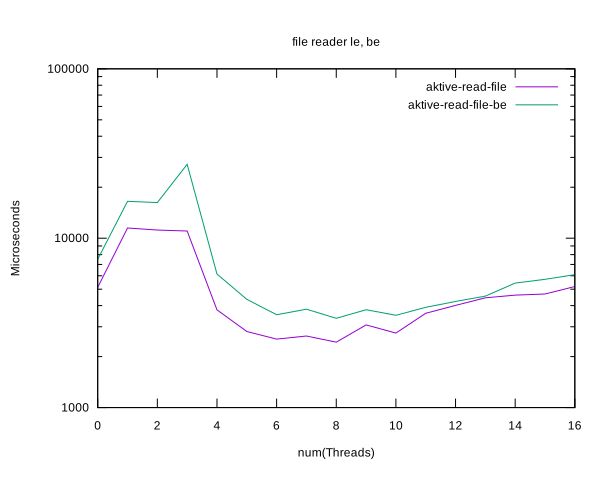
In line with expecations reading little-endian data is faster than reading big endian data. Given that we have to perform byte-swapping for big-endian, and nothing such for little-endian.
The gap is roughly 10% for reading from strings, and somewhat larger for reading from files.
Plots
Based on CSV
From files

From strings

